AI Work Assistants vs AI Chatbots: What's the Difference?
Learn the difference between AI chatbots and AI work assistants, including how each supports questions, tasks, workflows, automation, and everyday business work.
Introduction
AI chatbots and AI work assistants can both use artificial intelligence, but they are designed for different types of work.
A chatbot is usually focused on conversation: you ask a question, and it gives you an answer. An AI work assistant goes further by helping organize information, support tasks, and move work through connected steps.
In this guide, you’ll learn the difference between AI chatbots and AI work assistants, what each is best at, and which approach makes more sense for different types of work.
What Is an AI Chatbot?
An AI chatbot is designed mainly for conversation.
You provide a prompt or question, and the chatbot responds.
It can help with tasks such as:
- answering questions;
- explaining information;
- generating ideas;
- writing drafts;
- summarizing text;
- brainstorming;
- rewriting content.
For example, you might ask:
“Summarize this document.”
The chatbot reads the information and gives you a summary.
This can be very useful, especially when you need quick help with one specific task.
What Is an AI Work Assistant?
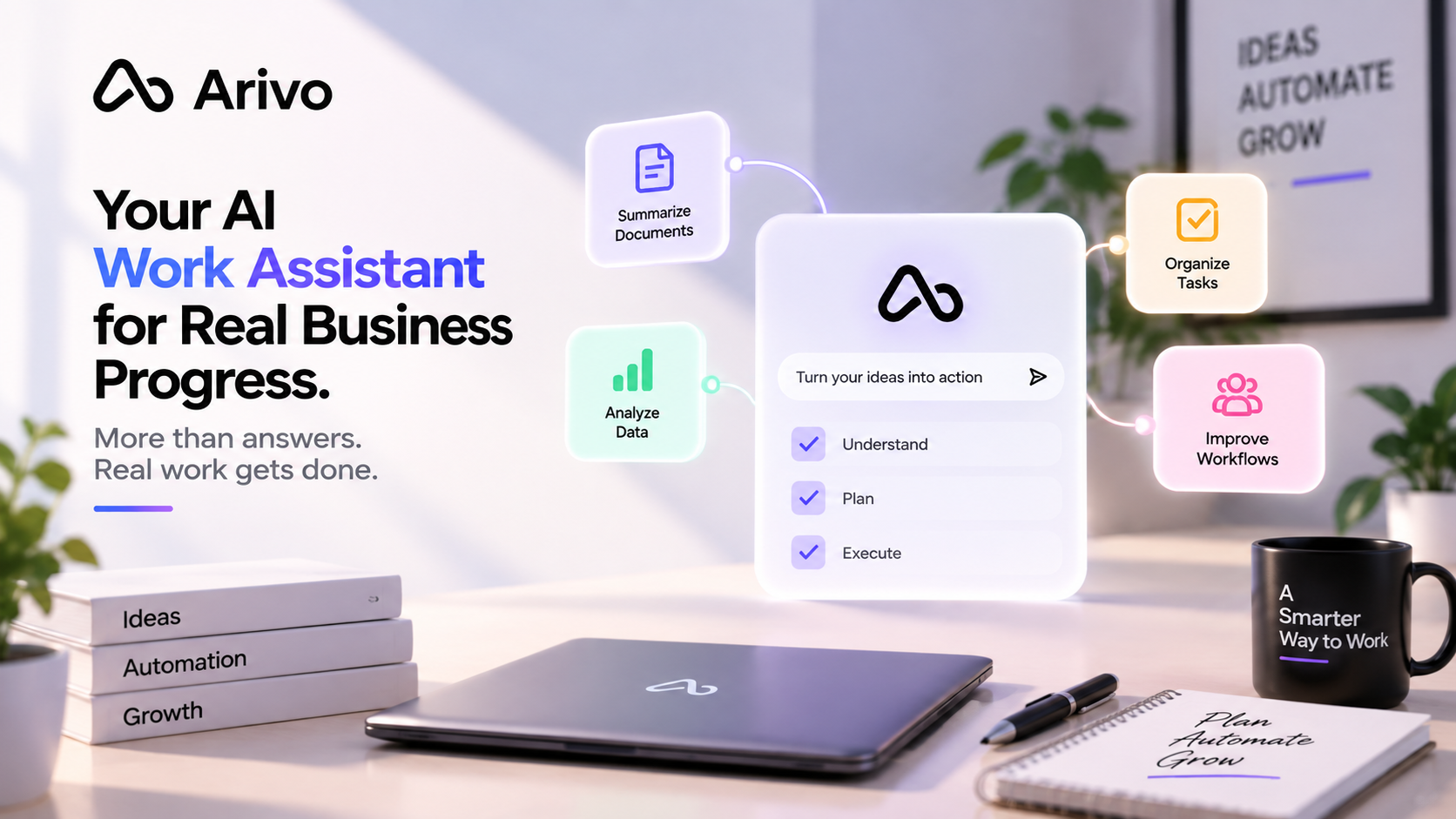
An AI work assistant is designed to help with practical work beyond a single conversation.
It can help organize information, manage tasks, work with documents, analyze data, and support repeatable processes.
For example, instead of only summarizing a document, an AI work assistant could help:
- summarize the document;
- identify important action items;
- organize the information;
- create tasks;
- prepare a follow-up draft;
- send the result for review.
The focus is not only on answering.
The focus is on helping work move forward.
If you want a deeper explanation, read what an AI work assistant is and how it can help your business.
AI Chatbot vs AI Work Assistant: The Main Difference
The simplest difference is this:
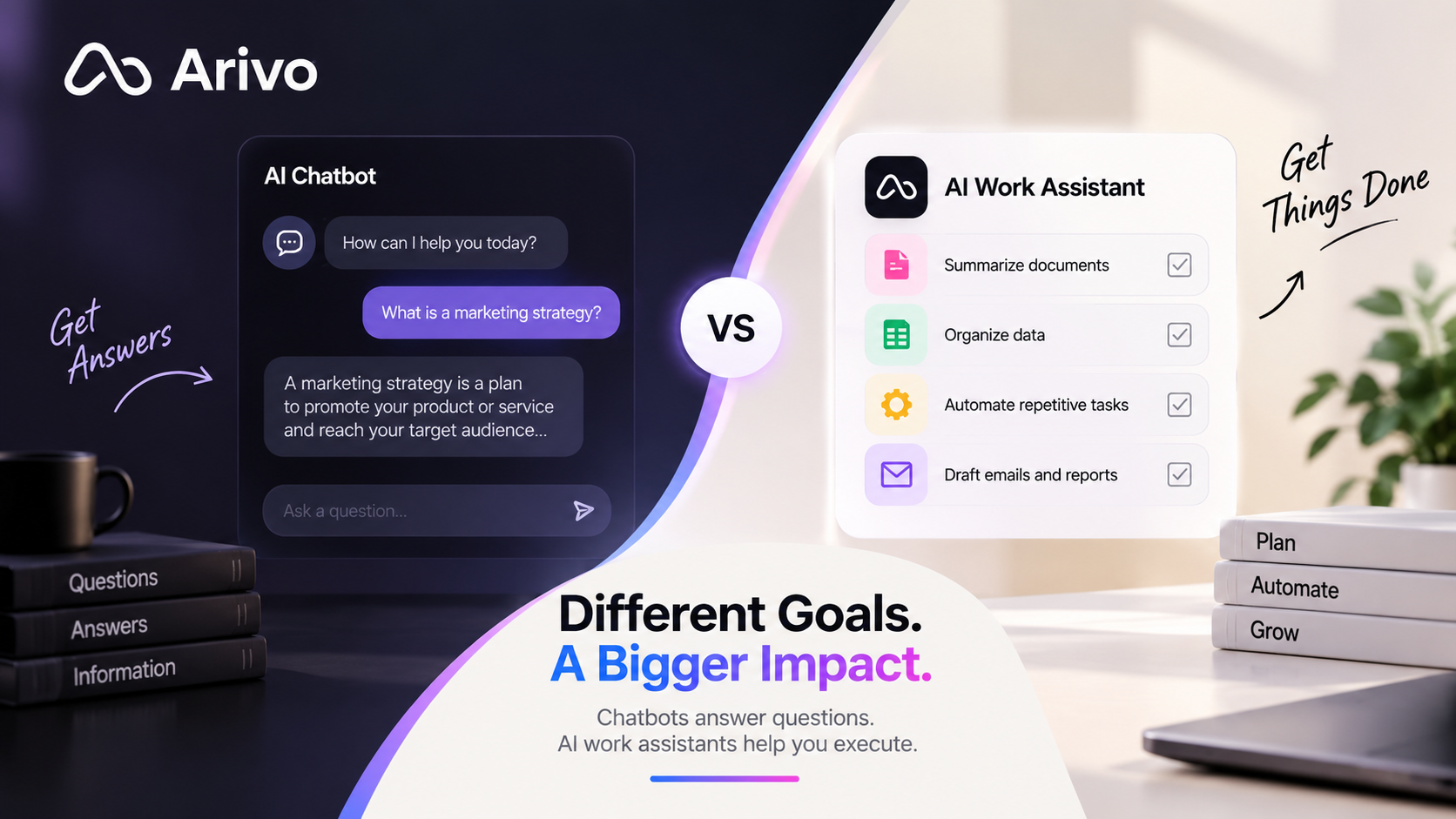
An AI chatbot helps you get answers.
An AI work assistant helps you get work done.
A chatbot usually responds to one request at a time.
An AI work assistant can support multiple connected steps.
For example:
AI Chatbot
You ask:
“Write a follow-up email for this customer.”
The chatbot creates the email.
AI Work Assistant
The assistant could:
- review the customer request;
- identify the issue;
- organize the information;
- prepare a follow-up email;
- create a related task;
- send the draft for review.
Both approaches can be useful.
The better choice depends on whether you need a single answer or support across a broader workflow.
Quick Comparison
AI Chatbot
Best for:
- questions and answers;
- brainstorming;
- quick explanations;
- isolated writing tasks;
- simple summaries;
- one-time requests.
AI Work Assistant
Best for:
- recurring tasks;
- document workflows;
- task organization;
- business processes;
- connected actions;
- repeatable work;
- automation.
The two are not necessarily competitors.
A chatbot can be useful for quick help, while an AI work assistant is better suited to work that involves several steps.
When Should You Use an AI Chatbot?
A chatbot is a good choice when the task is simple and self-contained.
For example:
- explaining a concept;
- generating ideas;
- rewriting a paragraph;
- summarizing a short document;
- creating a quick draft;
- answering a question.
If you only need one result and no further actions are required, a chatbot may be enough.
When Should You Use an AI Work Assistant?
An AI work assistant becomes more useful when work involves several connected steps.
For example:
- organizing customer requests;
- processing documents;
- managing recurring tasks;
- analyzing information;
- preparing reports;
- creating follow-up actions;
- supporting business workflows.
This is especially useful when the same process happens repeatedly.
An AI work assistant can become part of an AI workflow, helping reduce the need to repeat the same manual steps every time.
How AI Work Assistants Use Workflows
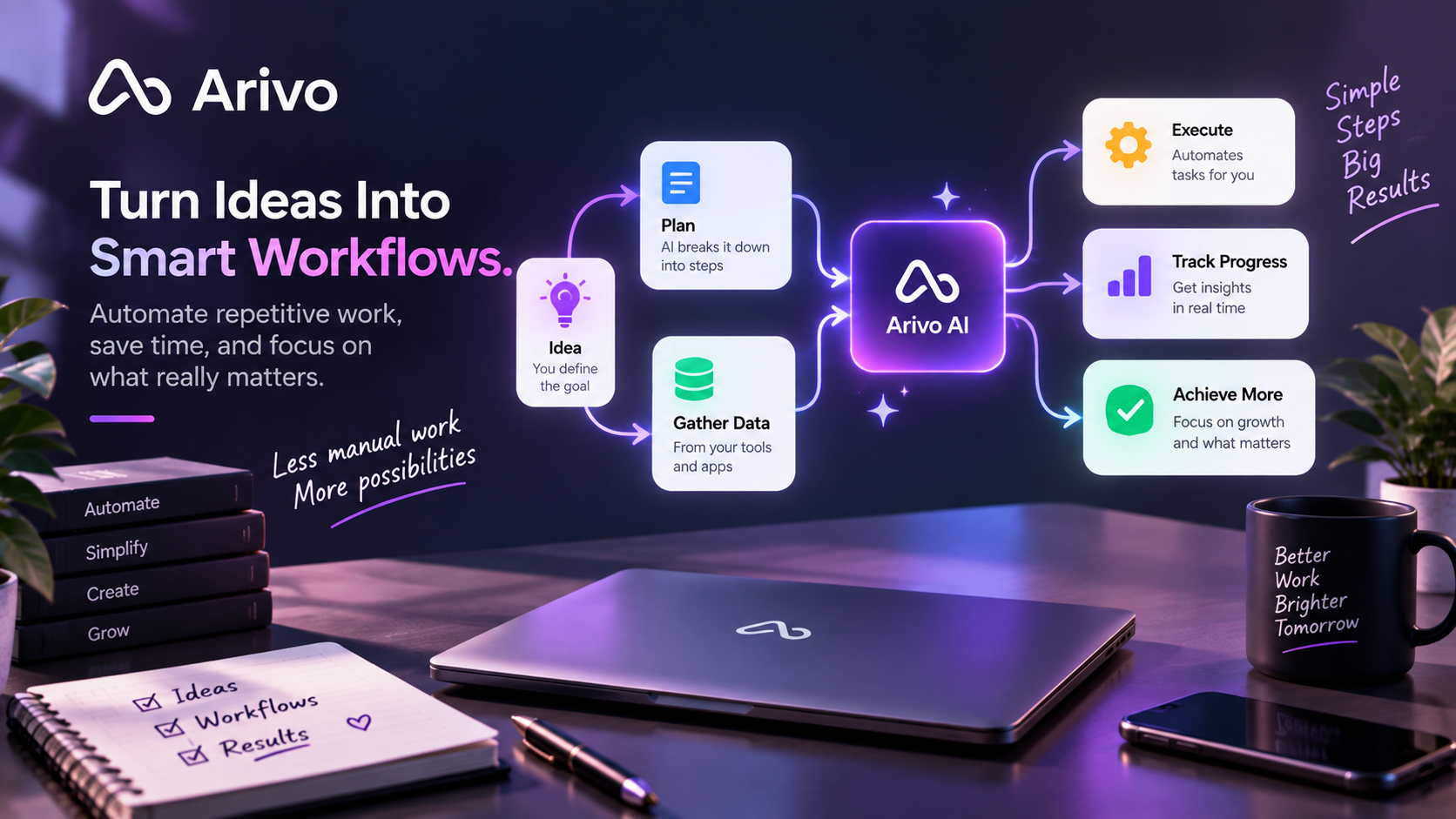
AI workflows connect tasks into a repeatable process.
For example, imagine a business receives a new customer request.
A workflow could:
- collect the request;
- identify the main issue;
- categorize it;
- create a task;
- prepare a response;
- send the result for human review.
The AI work assistant helps complete one or more of these steps.
If you are new to this concept, read what AI workflows are and how they work.
Can AI Work Assistants Automate Repetitive Work?
Yes.
When a task follows predictable steps, an AI work assistant can help automate parts of the process.
Examples include:
- organizing information;
- preparing standard drafts;
- summarizing documents;
- categorizing data;
- creating recurring reports;
- turning notes into tasks.
Automation does not mean removing people from every step.
Important results can still be reviewed before they are used.
For practical examples, see how to automate repetitive work with AI.
What About Documents and Spreadsheets?
AI work assistants can also support common business tools.
For documents, AI can help summarize information, organize content, identify key points, and create first drafts.
See how to use AI with Google Docs for practical examples.
For spreadsheets, AI can help explain data, identify patterns, suggest formulas, and prepare summaries.
See how to use AI with Google Sheets for more examples.
Which One Is Better for Your Business?
It depends on what you need.
Choose an AI chatbot when you mainly want:
- quick answers;
- ideas;
- explanations;
- one-time drafts;
- simple help with individual tasks.
Choose an AI work assistant when you need:
- repeatable processes;
- task organization;
- document and data workflows;
- multiple connected actions;
- automation;
- support for recurring business work.
For many businesses, both can be useful.
The important question is not which technology sounds more advanced.
It is which one fits the work you actually need to complete.
Start With the Work, Not the Tool
Before choosing an AI solution, look at your workflow.
Ask:
- What tasks do I repeat?
- Which tasks take the most time?
- Do I need an answer or a completed process?
- Are several steps connected?
- Where should a human review the result?
If your goal is only to get information, a chatbot may be enough.
If your goal is to organize, automate, and move work forward, an AI work assistant may be a better fit.
If you want to improve productivity more broadly, see how to be more productive using AI.
Frequently Asked Questions
Is an AI work assistant the same as an AI chatbot?
No. A chatbot is mainly designed for conversation and individual requests, while an AI work assistant is designed to support tasks, workflows, and recurring work.
Can an AI chatbot automate workflows?
A chatbot can help with individual steps, but a full workflow usually requires connected actions, tools, or automation beyond a single conversation.
What can an AI work assistant do that a chatbot cannot?
An AI work assistant can help connect multiple steps, organize work, support repeatable processes, and participate in workflows instead of only responding to isolated prompts.
Which is better for small businesses?
It depends on the task. Chatbots are useful for quick questions and drafts, while AI work assistants can be more useful for recurring tasks, workflows, and business operations.